

Shockwave Therapy in Singapore
Focused Treatment for Persistent Tendon and Heel Pain
QUICK ANSWER:
Shockwave therapy (extracorporeal shockwave therapy, or ESWT) uses acoustic pressure waves to treat persistent tendon and soft-tissue pain, such as plantar fasciitis and tendinopathy. At Elevate Physiotherapy in Singapore, it is used within an assessed physiotherapy plan — not on its own — so it targets conditions where the evidence supports it.
Shockwave therapy delivers focused acoustic pressure waves to an area of persistent soft-tissue or tendon pain. The technology was originally developed in medicine to break down kidney stones, and a focused form is now used in musculoskeletal care for conditions that have not settled with other treatment.
At Elevate Physiotherapy, shockwave is used selectively — where assessment suggests it is appropriate — as part of a broader physiotherapy in Singapore plan rather than as a stand-alone fix. Where a scan or previous treatment applies, it may sit alongside sports injury physiotherapy or dry needling as your physiotherapist advises.
What Conditions Can Shockwave Therapy Help With?
Shockwave therapy is most often used for persistent tendon and soft-tissue conditions. At Elevate Physiotherapy in Singapore, these include:
- Plantar fasciitis and heel pain.
- Achilles tendinopathy.
- Patellar (knee) tendinopathy.
- Tennis and golfer’s elbow.
- Rotator-cuff and shoulder tendon pain.
- Greater trochanteric (hip) pain.
How Does Shockwave Therapy Work and Is It Painful?
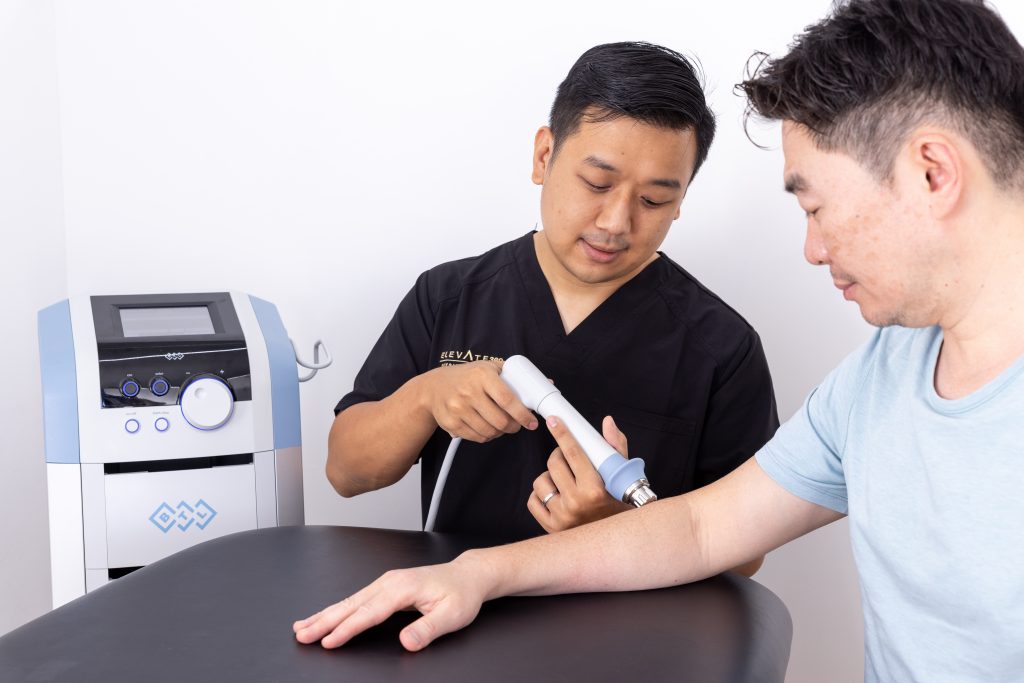
Shockwave therapy applies short bursts of acoustic pressure waves to the affected tissue through a hand-held applicator. Treatment usually takes a few minutes per area and can feel intense but tolerable; your physiotherapist adjusts the intensity to your comfort.
A course typically involves several sessions spaced a week or so apart. At Elevate Physiotherapy in Singapore, each session sits within a wider plan that also addresses strength and loading.
How Does Elevate Use Shockwave Therapy?
“Shockwave is a tool, not a cure on its own. It can help a stubborn tendon respond, but recovery still depends on progressive loading — so I use it alongside the exercise plan, not instead of it.”
— Winsen, Principal Physiotherapist, Elevate Physiotherapy
That is why every course starts with an assessment. We confirm the diagnosis, decide whether shockwave suits the condition, and combine it with a loading programme so the improvement is maintained.
Frequently Asked Questions
How many shockwave therapy sessions are needed for plantar fasciitis?
A course of shockwave therapy for plantar fasciitis typically involves several sessions spaced about a week apart, though the exact number depends on how the tissue responds. Shockwave is usually combined with a loading and stretching programme rather than used alone. At Elevate Physiotherapy in Singapore, your physiotherapist confirms the diagnosis first and gives a realistic course length after assessment.
Does shockwave therapy hurt?
Shockwave therapy can feel intense during the few minutes it is applied, but it is generally tolerable and your physiotherapist adjusts the intensity to your comfort. Some mild soreness afterwards is common and usually settles within a day or two. At Elevate Physiotherapy, the intensity is set to what you can comfortably manage, and you can ask to pause or ease off at any point.
Is shockwave therapy suitable for everyone?
Shockwave therapy is not suitable for everyone — it is generally avoided in pregnancy, over certain implants, and with some blood or nerve conditions, which is why assessment matters. It also suits specific tendon and soft-tissue problems
rather than every type of pain. At Elevate Physiotherapy in Singapore, a physiotherapist assesses whether shockwave is appropriate and safe for your condition before recommending it.
What is the difference between shockwave therapy and radiofrequency therapy?
Shockwave therapy uses acoustic pressure waves and is mainly used for persistent tendon and soft-tissue pain, while radiofrequency therapy uses electromagnetic energy to generate deep warmth and is often used for muscle and joint pain. They treat different problems and are chosen based on your condition. At Elevate Physiotherapy, your physiotherapist advises which, if either, suits your situation.
Price — $170 per treatment
A course usually involves several sessions. Your physiotherapist confirms the diagnosis first and gives a realistic course length after assessment.
Direct insurance billing may be available where your insurer issues a Letter of Guarantee (LOG) — contact the clinic to confirm.