


Pain and reduced tolerance of the Achilles tendon
What is Achilles Tendinopathy?
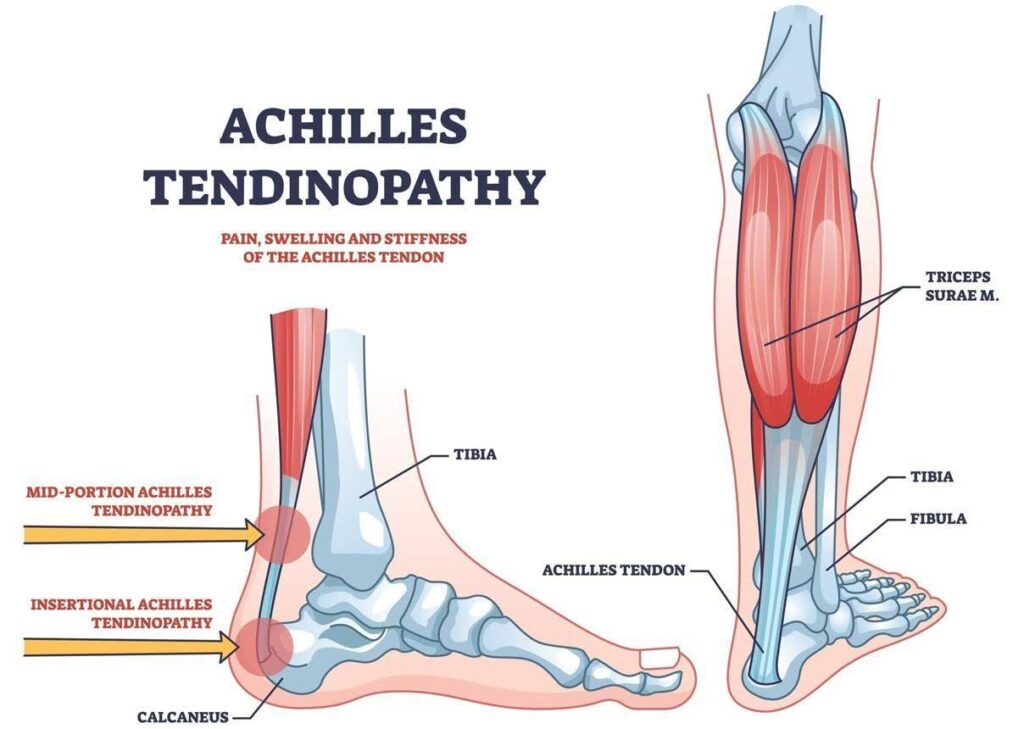
The Achilles tendon is the strong band of tissue connecting the calf muscles to the heel bone. It helps us walk, run, jump and push off the ground.
Achilles tendinopathy occurs when the tendon is unable to tolerate the amount of load being placed on it, resulting in pain, stiffness and reduced ability to perform activities.
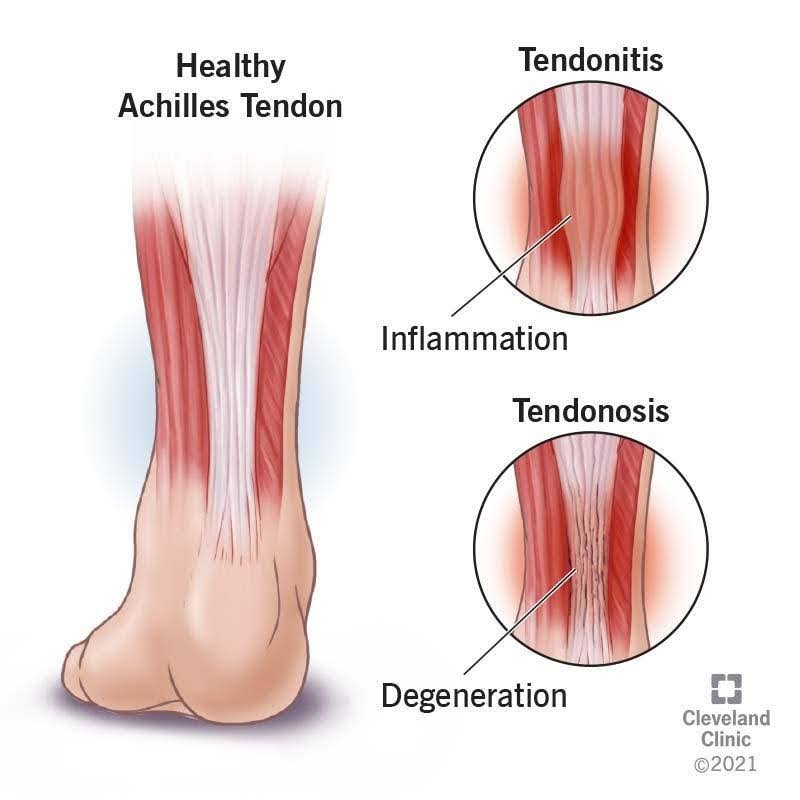
It is important to understand that this is not simply an inflammation problem. Tendons can undergo changes in their structure and capacity to handle load.
Types of Achilles Tendinopathy
There are two common locations:
- Mid-portion Achilles tendinopathy – Pain several centimetres above the heel.
- Insertional Achilles tendinopathy – Pain where the tendon attaches to the heel bone.
Common Symptoms of Achilles Tendinopathy
- Pain or tenderness in the Achilles tendon
- Morning stiffness
- Pain when walking or running
- Pain when going upstairs
- Pain during or after exercise
- Stiffness after sitting for a long time
- Reduced ability to run or jump
- Tenderness when pressing the tendon
Symptoms often increase when the tendon is exposed to more load than it is currently able to tolerate.
What Causes Achilles Tendinopathy?
Achilles tendinopathy usually develops from a combination of factors rather than one single cause.
Possible contributors include:
- Sudden increase in running or walking
- Increased training intensity
- Hill running
- Jumping activities
- Change in footwear or training surface
- Reduced calf strength
- Reduced tendon capacity
- Returning to sport too quickly after a break
- Increasing age
Achilles tendinopathy can occur in both athletes and recreationally active people.
When Should You See a Physiotherapist?
Consider physiotherapy if:
- Achilles pain persists for more than a few days
- Pain is affecting walking or exercise
- Morning stiffness is increasing
- You are unable to perform your usual activities
- The tendon is becoming progressively more painful
- You repeatedly experience symptoms after exercise
When to Seek Urgent Medical Assessment
Urgent medical assessment is needed if you suddenly feel or hear a “pop”, experience sudden severe pain, or have difficulty pushing off or walking, as these symptoms may indicate an Achilles tendon rupture.
How Is Achilles Tendinopathy Treated?
At Elevate, we tailor-make a complete “Road Map” based on the patient’s biopsychosocial status, keeping their concerns and goals in mind to help them return to the activities they enjoy most.
Modalities such as shockwave therapy and functional exercises may help improve movement and stability.
The focus is on progressive loading of the tendon.
Treatment May Include
- Education about tendon loading
- Modification of aggravating activities
- Calf strengthening
- Progressive tendon-loading exercises
- Balance and lower-limb strengthening
- Gradual return to running and jumping
- Assessment of footwear and training programme
- Addressing contributing hip, knee, ankle or foot factors
The 2024 JOSPT clinical practice guideline supports individualised, progressive exercise and loading programmes as a key component of managing mid-portion Achilles tendinopathy.
What Is the Treatment Process Like?
-
Stage 1 – Understand and Control the Load
Identify which activities are irritating the tendon and temporarily modify them.
-
Stage 2 – Reduce Pain and Restore Basic Capacity
Begin appropriate calf and ankle exercises.
-
Stage 3 – Build Tendon Strength
Progress resistance and loading gradually.
-
Stage 4 – Restore Functional Capacity
Introduce faster movements, stairs, hopping or running where appropriate.
-
Stage 5 – Return to Sport or Activity
Gradually increase training volume, speed and intensity.
How Long Does Recovery Take?
Achilles tendinopathy often takes several months rather than several days to fully settle.
The exact recovery time depends on:
- Duration of symptoms
- Severity
- Activity demands
- Tendon capacity
- Consistency with rehabilitation
- How quickly load is progressed
Improvement should be judged by function and tolerance to activity, not simply by whether the tendon looks normal on a scan.
Evidence at a Glance
A systematic review and meta-analysis found an overall prevalence of Achilles tendinopathy of approximately 6% among people participating in physical exercise, increasing to approximately 8% in people over 45 in the included studies.
The 2024 JOSPT clinical practice guideline provides updated evidence-based recommendations for the examination and physical therapy management of mid-portion Achilles tendinopathy.
The Good News Is
Achilles tendinopathy usually responds to appropriate, progressive rehabilitation. Complete rest is not normally the long-term solution. The aim is to gradually build the tendon back up so it can tolerate the activities you want to perform.
Recovery Pathway
Reduce Aggravating Load → Restore Basic Strength → Build Tendon Capacity → Return to Running or Activity → Prevent Recurrence
This information is for general education and does not replace an individual clinical assessment.