


When the median nerve becomes compressed at the wrist
What Is Carpal Tunnel Syndrome?
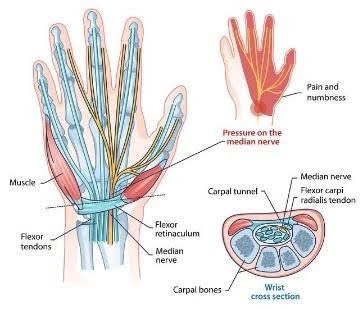
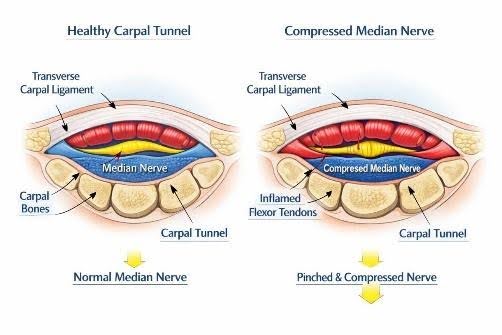
The median nerve passes through a narrow space at the wrist called the carpal tunnel.
If pressure increases inside this tunnel, the nerve can become compressed.
This may cause:
- Numbness
- Tingling
- Pain
- Weakness
- Difficulty using the hand
Carpal tunnel syndrome is the most common compressive nerve problem affecting the upper limb. Reviews generally estimate its prevalence at around 3–5% of the general population, although estimates vary considerably between studies.
What Are the Symptoms of Carpal Tunnel Syndrome?
Typical symptoms include:
- Numbness or tingling in the thumb, index, middle and part of the ring finger
- Symptoms that are worse at night
- Waking up needing to shake the hand
- Hand or wrist discomfort
- Weak grip
- Difficulty opening jars or holding objects
- Dropping things
- In advanced cases, weakness of the thumb muscles
What Causes Carpal Tunnel Syndrome?
Possible contributing factors include:
- Increased pressure within the carpal tunnel
- Repetitive or sustained wrist positions
- Pregnancy or fluid changes
- Diabetes
- Thyroid disorders
- Arthritis
- Previous wrist injury
- Certain occupational activities
Sometimes, no single cause can be identified.
When Should You See a Physiotherapist?
Seek assessment if:
- Tingling or numbness keeps returning
- Symptoms wake you at night
- You are losing grip strength
- You are dropping objects
- Symptoms interfere with work or daily activities
- Symptoms are persistent or worsening
Persistent numbness or thumb weakness should not simply be ignored.
What Is the Treatment Process Like?
- Stage 1 – Identify Aggravating Factors
- Stage 2 – Improve Wrist Positioning
- Stage 3 – Manage Symptoms
- Stage 4 – Restore Hand Function
- Stage 5 – Gradual Return to Normal Activities
If symptoms are severe or there is significant nerve compression, a doctor may discuss carpal tunnel release surgery.
How Long Does Recovery Take?
Mild symptoms may improve over weeks to several months with appropriate management.
Recovery varies considerably depending on how long the nerve has been compressed and whether there is weakness or nerve damage.
After surgery, symptom improvement may begin relatively quickly, but nerve recovery can continue for months.
Evidence at a Glance
Carpal tunnel syndrome affects approximately 3–5% of the general population, with higher rates reported in women and older adults.
The 2024 AAOS clinical practice guideline is the current major evidence-based guideline for the diagnosis and management of adult carpal tunnel syndrome (CTS).
The Good News Is
Carpal tunnel syndrome is treatable. The key is identifying the severity early and choosing treatment appropriate to the individual rather than treating every patient in exactly the same way.
Recovery Pathway
Reduce Nerve Irritation → Optimise Wrist Position → Restore Hand Function → Strengthen → Return to Activity
This information is for general education and does not replace an individual clinical assessment.