


When changes in the hip joint cause pain, stiffness and reduced function
What is Hip Osteoarthritis?
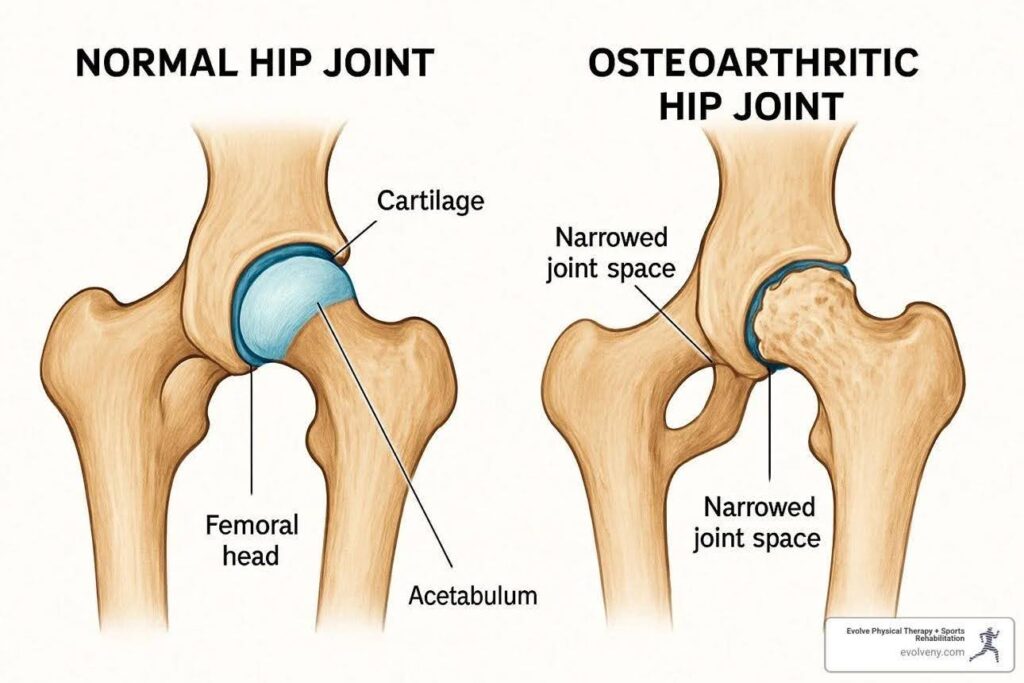
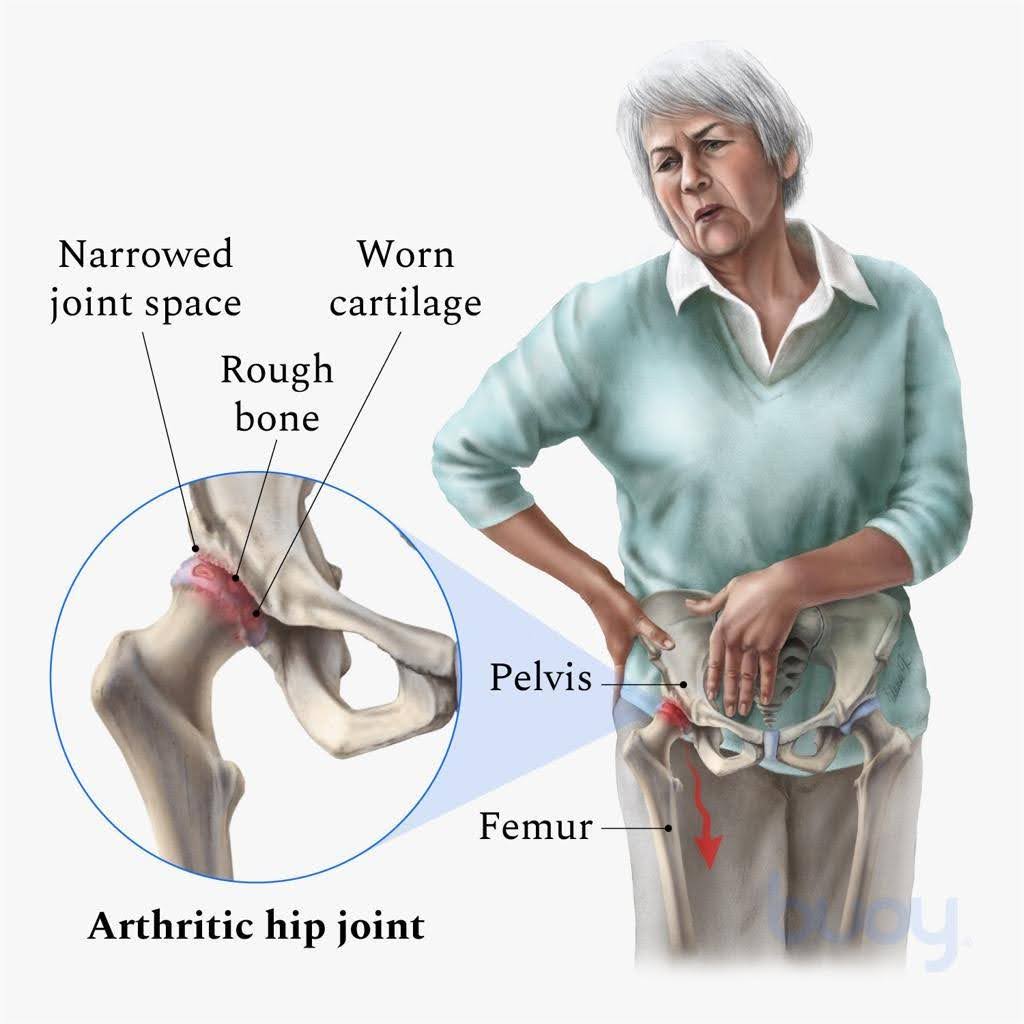
Hip osteoarthritis (OA) is a condition affecting the whole hip joint, including the cartilage, bone and surrounding tissues.
The hip is a ball-and-socket joint. With osteoarthritis, changes can occur in the cartilage and bone, while the surrounding muscles may also become weaker.
Importantly
- The amount of arthritis seen on an X-ray does not always match the amount of pain a person experiences.
- Osteoarthritis is common as people get older, but it is not an inevitable part of ageing.
What are the symptoms?
Common Symptoms of Hip Osteoarthritis
- Pain around the groin
- Pain around the front or side of the hip
- Pain extending into the thigh or buttock
- Stiffness after sitting
- Difficulty putting on shoes or socks
- Difficulty getting into or out of a car
- Difficulty climbing stairs
- Reduced walking distance
- Reduced hip movement
- Stiffness after waking
What causes it?
Risk Factors for Hip Osteoarthritis
Risk factors can include:
- Increasing age
- Previous hip injury
- Previous hip surgery
- Repetitive heavy loading
- Certain hip shapes or developmental conditions
- Higher body weight
- Family history or genetic factors
However, there is rarely one single cause.
When Should You See a Physiotherapist?
When Can Physiotherapy Help?
Physiotherapy can help if:
- Hip pain is limiting your walking
- Stiffness is affecting daily activities
- You are becoming less active
- You are having difficulty with stairs
- You are struggling with shoes or socks or getting into a car
- You want to delay or prepare for possible surgery
How is it treated?
At Elevate, we tailor-make a complete “Road Map” based on the patient’s biopsychosocial status, keeping their concerns and goals in mind to help them return to the activities they enjoy most.
Evidence-Based Treatment May Include
- Education
- Exercise therapy
- Strengthening
- Mobility exercises
- Aerobic activity
- Balance and functional training
- Weight management, where appropriate
- Activity modification
- Pain-management strategies
Exercise is considered a core component of evidence-based hip and knee osteoarthritis (OA) management.
The 2025 JOSPT clinical practice guideline update specifically addresses physical therapy for hip OA and supports exercise-based rehabilitation, with manual therapy also considered as part of care.
What is the treatment process like?
Stages of Hip Osteoarthritis Rehabilitation
-
Stage 1 – Understand the Condition
Education and identification of individual limitations.
-
Stage 2 – Reduce Pain and Stiffness
Gentle mobility and appropriate activity.
-
Stage 3 – Strengthen
Build hip and lower-limb strength.
-
Stage 4 – Improve Function
Practise stairs, walking, transfers and daily activities.
-
Stage 5 – Maintain Independence
Continue exercise and activity long term.
If symptoms become severe despite appropriate non-surgical treatment, an orthopaedic assessment for joint replacement may be considered.
How long does recovery take?
Hip osteoarthritis (OA) is a long-term condition rather than an injury with a fixed healing time.
Many people experience meaningful improvements over 6–12 weeks or longer with consistent exercise and activity management.
The goal is not necessarily to “remove the arthritis.”
The goal is:
Less pain → Better movement → Stronger muscles → Greater independence
Evidence at a Glance
A 2023 systematic review of 31 studies involving 326,463 people estimated the worldwide prevalence of radiographic hip OA at approximately 8.55%, with prevalence increasing with age.
The WHO estimates that 528 million people worldwide were living with osteoarthritis in 2019, and the hip is among the commonly affected joints.
The Good News Is
Having hip arthritis does not automatically mean you need a hip replacement.
Exercise, strengthening and maintaining activity can improve pain, function and quality of life.
Recovery Pathway
Reduce pain → Improve mobility → Strengthen → Improve function → Maintain independence
This information is for general education and does not replace an individual clinical assessment.