


TFCC Injury — is pain along the little-finger side of your wrist. The good news is that many TFCC injuries can improve with physiotherapy and gradual strengthening without surgery.
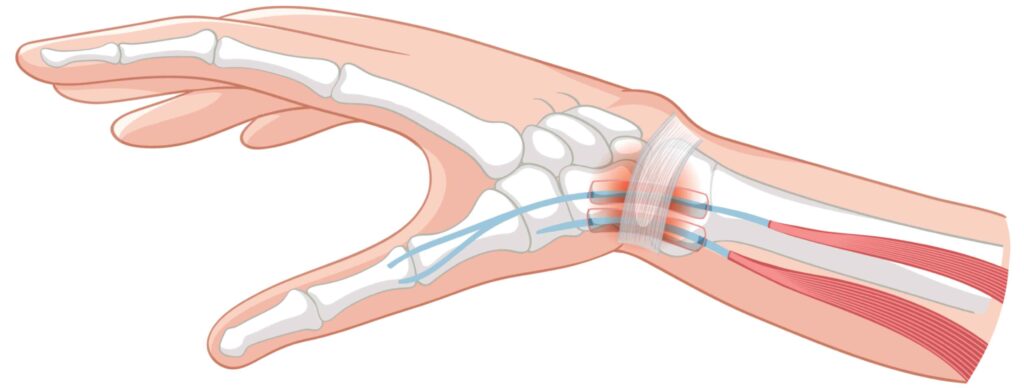
TFCC stands for Triangular Fibrocartilage Complex. Think of the TFCC as a small cushion and support system inside your wrist. It is made up of cartilage and strong supporting tissues that help connect and stabilise the bones of your forearm and wrist. It allows you to rotate your forearm and wrist smoothly, such as when turning a key, opening a jar or using a screwdriver. When this structure becomes irritated, overstretched or torn, it is called a TFCC injury or TFCC tear.
What are the symptoms?
The most common symptom is pain along the little-finger side of the wrist. You may notice pain when turning your wrist or forearm or when gripping or holding something tightly, difficulty opening jars or bottles or when using a screwdriver, playing with a racket or sports equipment. Clicking, popping or a feeling of something moving inside the wrist or weakness of the wrist or grip, swelling around the wrist you might feel that the wrist is unstable or “giving way” Difficulty putting weight through the hand, such as getting up from a chair, some people may have a TFCC tear without significant symptoms, particularly when the tear is related to gradual wear and tear rather than a sudden injury.
What is the cause?
There are two main causes, sudden injury example falling onto an outstretched hand or a sudden twist of the wrist during sports, lifting or pulling heavy things, a wrist fracture or as we get older, the tissues in the wrist can become thinner and less resilient. Repetitive activities such as racquet sports also will cause TFCC to degenerate overtime.
When should you see a physiotherapist?
You should consider seeing a physiotherapist if your wrist pain continues for more than a few days despite reducing activities or keeps coming back with simple daily activities and makes gripping or lifting difficult, hurts when rotating the wrist, is accompanied by clicking or weakness and interferes with work, exercise or everyday activities, not improving with rest. A physiotherapist can assess your wrist movement, grip strength, pain pattern and functional activities and determine whether your symptoms are consistent with a TFCC problem or whether another wrist condition may be the cause.
How is a TFCC injury treated?
Treatment depends on the type and severity of the injury and how much it is affecting you.
Early Treatment
The first goal is to protect the wrist and reduce irritation. This may include:
- Temporarily reducing painful activities
- Using a wrist or forearm brace/splint
- Advice on how to use the wrist without aggravating it
- Pain management
- Ice when appropriate for symptom relief
A brace can help keep the wrist and forearm stable while the injured tissues settle.
Physiotherapy
Once the pain is settling, physiotherapy becomes particularly important.
Treatment may include:
-
Restoring movement
Gentle exercises help restore comfortable wrist and forearm movement.
-
Improving strength
The muscles around the wrist and forearm are progressively strengthened to improve support and stability.
-
Improving grip strength
Grip exercises are introduced gradually as symptoms allow.
-
Improving wrist stability
Exercises help the wrist tolerate everyday activities and sports again.
-
Activity modification
You will learn which movements are irritating the wrist and how to modify them while healing.
-
Gradual return to activity
The aim is not simply to make the wrist pain-free but to make it strong and capable enough to return to normal activities.
Physiotherapy uses progressive movement, strengthening and functional exercises
to restore mobility, strength and confidence after injury.

6. What is the treatment process like?
Think of rehabilitation as four stages rather than simply “rest until the pain goes.”
Stage 1 — Protect and Settle the Wrist
Goal: Reduce pain and irritation.
You may temporarily need to avoid:
- Heavy lifting
- Strong gripping
- Repetitive twisting
- Weight-bearing through the wrist
- Sports that aggravate your symptoms
A brace may be recommended.
Stage 2 — Restore Movement
Once the pain is under better control, gentle exercises are introduced.
The focus is on:
- Wrist movement
- Forearm rotation
- Flexibility
- Comfortable everyday movements
The exercises should generally not cause a significant increase in pain.
Stage 3 — Build Strength and Stability
This is an important part of recovery.
Exercises gradually progress from simple movements to:
- Wrist strengthening
- Forearm strengthening
- Grip strengthening
- Functional loading
- Stability exercises
The amount of resistance is increased gradually as your wrist becomes stronger.
Stage 4 — Return to Normal Activity
Finally, your physiotherapist will help you return to:
- Work
- Gym
- Yoga
- Tennis/badminton
- Lifting
- Household activities
- Other activities that require wrist strength
The progression should be gradual rather than going from complete rest directly
back to full activity.
7. How long does it take to recover?
There isn’t one recovery time for every TFCC injury.
It depends on:
- Whether the injury is mild or severe
- Whether it is an acute injury or wear-and-tear problem
- Your age and general health
- How long you have had symptoms
- Whether the wrist is unstable
- Your occupation and sporting demands
- How consistently you follow the rehabilitation programme
A General Guide
Mild irritation:
You may notice significant improvement over several weeks.
More significant TFCC injuries:
Recovery can take several weeks to a few months, particularly when the wrist
needs progressive strengthening.
After surgery:
Post-surgery recovery is longer. People may regain full function within
approximately 12 weeks, although individual recovery varies.
Remember
Pain → Protect → Restore movement → Strengthen → Stabilise → Return to activity
The aim of physiotherapy is not simply to reduce your pain. The ultimate goal
is to give you a wrist that is strong, stable and confident enough to return
to the activities you enjoy.