


What is a rotator cuff injury?
Your shoulder is designed to move in many directions, which makes it very mobile—but also means it relies heavily on muscles and tendons for stability.
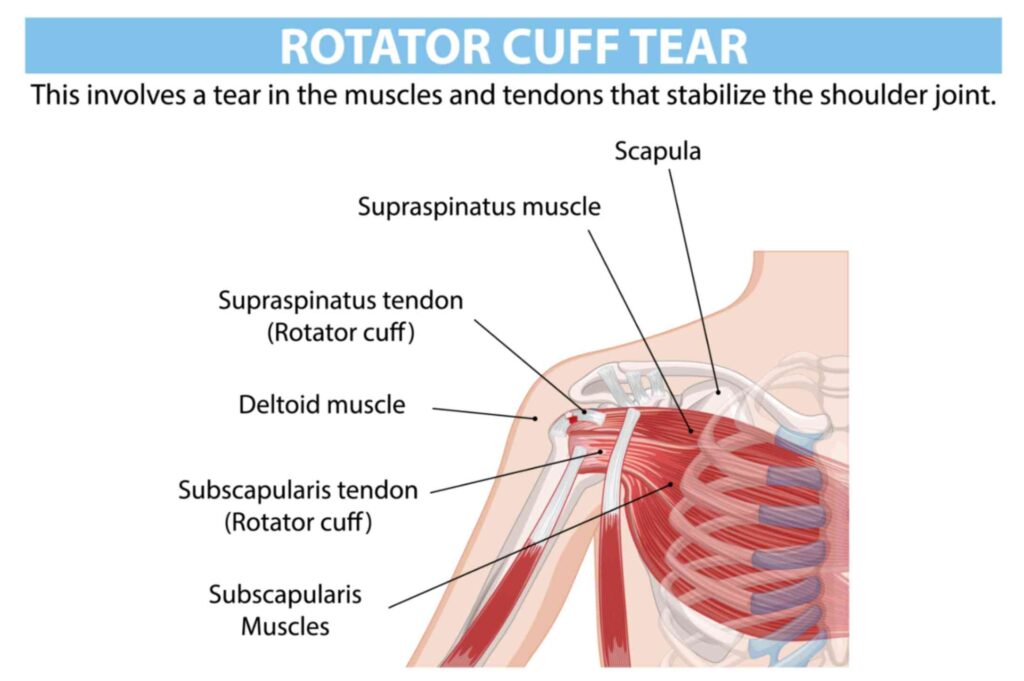
The rotator cuff consists of four muscles:
- Supraspinatus
- Infraspinatus
- Teres minor
- Subscapularis
These muscles help keep the head of the upper-arm bone centred in the shoulder socket while you move your arm.
A rotator cuff injury can involve irritation, weakening or tearing of one or more of these tendons.
Evidence at a Glance
Rotator cuff abnormalities become increasingly common with age and are not always painful. One population study found full-thickness rotator cuff tears in 22.1% of participants, but approximately 65% of those tears were asymptomatic.
This is why an MRI finding should always be interpreted alongside the person’s symptoms and physical examination.
What are the symptoms?
Common symptoms include:
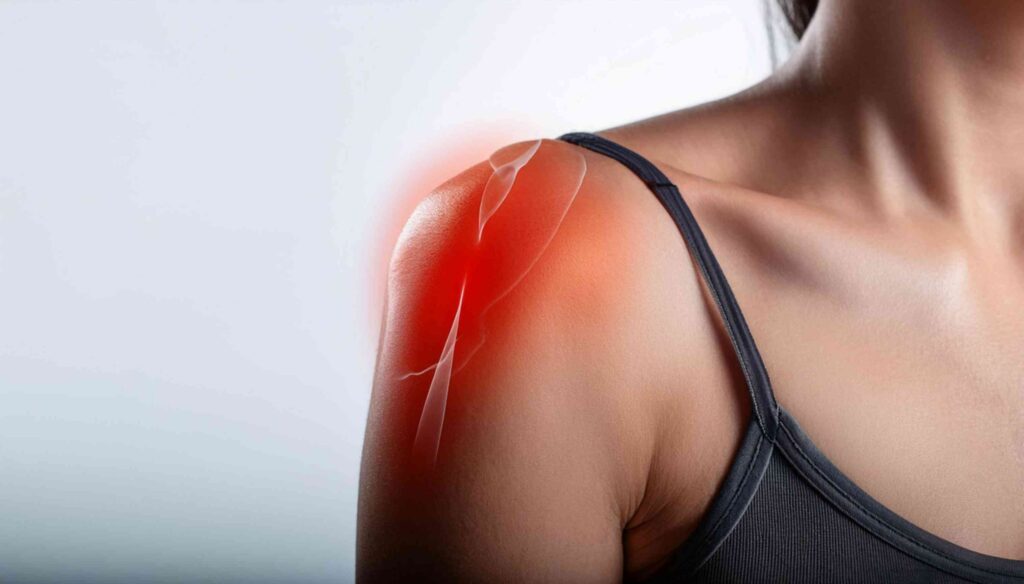
- Pain at the front or side of the shoulder
- Pain when lifting the arm
- Pain reaching overhead
- Difficulty reaching behind your back
- Pain when lying on the affected shoulder
- Shoulder weakness
- Difficulty lifting objects
- Pain when putting on clothes
- Reduced shoulder movement
- A feeling of weakness when raising the arm
Some people with a rotator cuff tear may have little or no pain, particularly when the tear has developed gradually.
What causes a rotator cuff injury?
A. Gradual Wear and Tear
Rotator cuff tendons naturally change with age.
Repeated use over many years can make the tendons more vulnerable to injury.
B. Repetitive Overhead Activity
Activities such as:
- Swimming
- Tennis
- Badminton
- Throwing sports
- Painting
- Construction work
- Repeated overhead work
These activities can place repeated stress on the shoulder.
C. Sudden Injury
A fall, lifting something heavy or sudden force through the arm can cause an acute tear.
D. Shoulder Dislocation
A traumatic shoulder dislocation can sometimes damage the rotator cuff, particularly in older adults.
When should you see a physiotherapist?
See a physiotherapist if:
- Shoulder pain is lasting more than a few weeks
- You are losing shoulder movement
- You notice weakness
- You have difficulty lifting your arm
- Pain is disturbing your sleep
- Everyday activities are becoming difficult
- Pain keeps returning when you exercise
If you have sudden severe pain and weakness following a fall or injury,
medical assessment is recommended because a significant tear or other injury
may need to be ruled out.
How is it treated?
At Elevate, we tailor-make a complete “Road Map” based on the patient’s biopsychosocial status, keeping in mind their concerns and goals to return to the activities they enjoy the most.
Treatment depends on the type and severity of the injury.
Non-surgical treatment may include:
- Activity modification
- Pain management
- Physiotherapy
- Mobility exercises
- Rotator cuff strengthening
- Shoulder blade strengthening
- Posture and movement retraining
- Gradual return to activity
Not every rotator cuff tear requires surgery. The American Academy of Orthopaedic Surgeons notes that more than 50% of patients may obtain symptom relief without surgery.
Some large or traumatic tears, particularly when associated with significant weakness or functional loss, may require an orthopaedic assessment.
What is the treatment process like?
Stage 1 — Reduce Pain and Irritation
We identify the activities aggravating your shoulder and modify them.
Stage 2 — Restore Movement
Gentle mobility exercises help restore comfortable shoulder movement.
Stage 3 — Build Strength
The rotator cuff, shoulder blade and surrounding muscles are progressively strengthened.
Stage 4 — Improve Function
Exercises are progressed towards activities such as reaching, lifting and carrying.
Stage 5 — Return to Work or Sport
Sport- or work-specific movements are gradually reintroduced. The programme is adjusted according to your symptoms, strength and goals.
What is the treatment process like?
Recovery varies considerably.
Mild tendon problems may improve over several weeks, while more significant tears or longstanding shoulder problems can take several months.
Following surgery, rehabilitation generally takes considerably longer.
The important thing is that pain relief and tissue healing are not always the same thing. Your shoulder may feel better before it has regained its full strength.
The Good News Is
A rotator cuff tear on an MRI does not automatically mean you need surgery. Your symptoms, strength, movement and functional needs all matter when
deciding on the best treatment.
Reduce irritation → Restore movement → Strengthen → Improve function → Return to activity
This information is for general education and does not replace an individual assessment by a physiotherapist or doctor.