


When the ulnar nerve at the elbow becomes irritated or compressed
What Is Cubital Tunnel Syndrome?
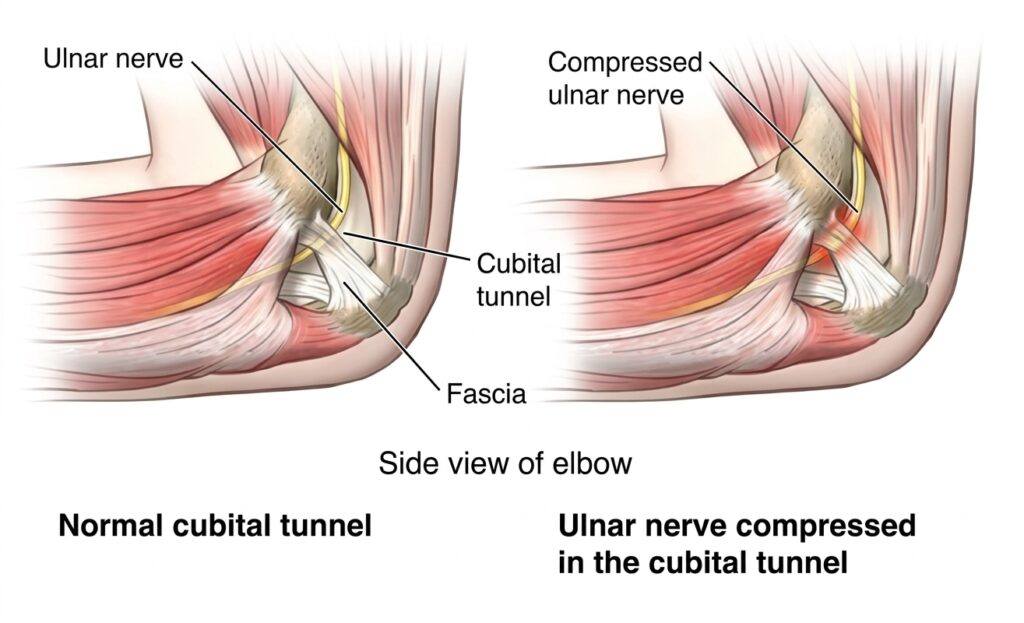
The ulnar nerve is one of the main nerves supplying the hand. It travels behind the inside of your elbow through a narrow passage called the cubital tunnel.
When this nerve becomes irritated or compressed, it can cause numbness, tingling, pain or weakness in the arm and hand.
You may know the ulnar nerve as the nerve that causes the familiar “funny bone” sensation when you knock your elbow.
Cubital tunnel syndrome is the second most common entrapment neuropathy of the upper limb, after carpal tunnel syndrome. A large US database study estimated an incidence of approximately 30 cases per 100,000 person-years.
What Are the Symptoms of Cubital Tunnel Syndrome?
Common symptoms include:
- Tingling or numbness in the little finger and half of the ring finger
- Symptoms that worsen when the elbow is bent for a long time
- Aching or pain around the inside of the elbow
- Symptoms at night
- Weak grip
- Difficulty with fine hand movements
- Dropping objects
- In more advanced cases, weakness or wasting of the small muscles of the hand
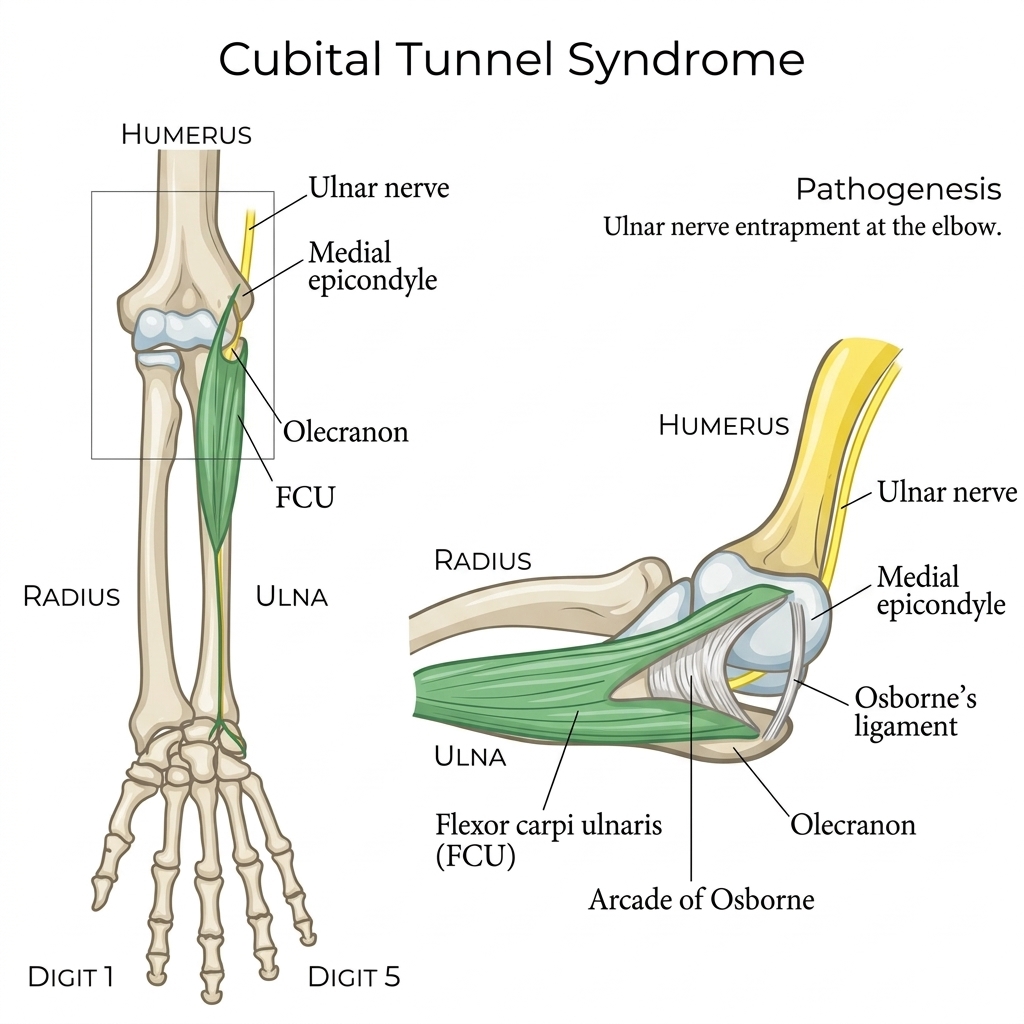
What Causes Cubital Tunnel Syndrome?
The ulnar nerve can become irritated by:
- Keeping the elbow bent for prolonged periods
- Leaning on the elbow
- Repetitive elbow movements
- Prolonged phone use
- Sleeping with the elbow tightly bent
- Previous elbow injury or arthritis
- Anatomical changes around the elbow
Sometimes, there is no single identifiable cause.
When Should You See a Physiotherapist?
See a physiotherapist if you have:
- Persistent tingling or numbness
- Symptoms that interfere with sleep
- Reduced grip strength
- Difficulty with hand function
- Repeated symptoms when bending the elbow
- Symptoms that are not improving with activity modification
Early assessment is particularly important if weakness is developing.
How Is Cubital Tunnel Syndrome Treated?
At Elevate, we tailor-make a complete “Road Map” based on the patient’s biopsychosocial status, keeping their concerns and goals in mind to help them return to the activities they enjoy most.
Treatment depends on the severity of the condition and whether there is evidence of nerve damage.
Physiotherapy May Include
- Education about nerve irritation
- Avoiding prolonged elbow flexion
- Reducing pressure on the inside of the elbow
- Night-time positioning or splinting, when appropriate
- Gentle nerve mobility exercises, when indicated
- Shoulder, neck and upper-limb assessment
- Grip and hand strengthening, when appropriate
- Ergonomic modification
If symptoms are severe, progressive or associated with significant weakness or muscle wasting, referral to a doctor or hand specialist may be necessary.
What Is the Treatment Process Like?
-
Stage 1 – Reduce Nerve Irritation
Identify and modify activities that aggravate the nerve.
-
Stage 2 – Improve Positioning
Modify sleeping, desk and telephone habits.
-
Stage 3 – Restore Movement
Use carefully selected nerve and upper-limb mobility exercises.
-
Stage 4 – Restore Strength
Progress grip and hand function as symptoms allow.
-
Stage 5 – Return to Normal Activity
Gradually reintroduce occupational, sporting and daily activities.
How Long Does Recovery Take?
Mild cases can improve over several weeks to a few months once aggravating factors are addressed.
More established nerve compression may take considerably longer.
If there is significant weakness or muscle wasting, recovery can be slower, and medical or surgical assessment may be required.
Evidence at a Glance
Cubital tunnel syndrome has an estimated incidence of around 30 cases per 100,000 person-years in a large US administrative database study.
Conservative treatment can provide symptom relief, but persistent or severe nerve compression may require specialist assessment.
The Good News Is
Many people improve when nerve irritation is identified early and aggravating positions and activities are modified.
Recovery Pathway
Reduce Nerve Irritation → Improve Positioning → Restore Movement → Strengthen → Return to Function
This information is for general education and does not replace an individual clinical assessment.