

Myofascial Pain Syndrome: Symptoms, Causes, Treatment
Quick Answer: Myofascial pain syndrome is musculoskeletal pain driven by trigger points, which are hyperirritable spots within taut bands of muscle fibres that refer pain elsewhere. It most often affects the neck, shoulders and lower back. Treatment centres on graded loading and workload change, with dry needling or manual therapy used as short-term adjuncts.
Persistent neck, shoulder or lower back pain that feels like a deep, tender knot is one of the most common presentations we see in 2026. Patients often press on one spot and feel the pain shoot somewhere else entirely. That referral pattern is the hallmark of a myofascial trigger point.
This guide sets out what myofascial pain syndrome is, why trigger points develop, what the current evidence says about dry needling, and how Elevate Physiotherapy in Singapore approaches treatment. The honest picture is more nuanced than most clinic pages suggest.
What is myofascial pain syndrome?
Myofascial pain syndrome is a regional musculoskeletal pain condition caused by myofascial trigger points. A 2025 review in Muscle & Nerve defines these as hyperirritable spots within taut bands of muscle fibres. Pressing one reproduces the familiar pain and often refers it to a predictable area some distance from the spot itself.
Reported prevalence varies widely depending on where it is measured. That same review records trigger points in 30% to 46% of young and middle-aged adults attending pain clinics, rising to 85% at one pain rehabilitation referral centre. In a musculoskeletal referral programme, 93% of patients had trigger points and 74% met specific diagnostic characteristics.
Those figures describe people already referred for pain, not the general population, and should not be read as a community prevalence rate. The review also states plainly that the diagnostic criteria for the condition remain unsettled. No blood test or scan confirms it.
|
Myofascial pain syndrome |
What it is not |
|
|
Distribution |
Regional — one muscle group or one quadrant of the body |
Not widespread body-wide pain (that pattern points elsewhere) |
|
Key finding |
A tender spot in a taut band that reproduces and refers the familiar pain |
Not a structural tear, and not visible on a standard scan |
|
Diagnosis |
Clinical, by history and palpation |
Not confirmed by imaging or laboratory testing |
|
Typical sites |
Upper trapezius, levator scapulae, gluteals, quadratus lumborum |
Not limited to the site the patient points at |
At Elevate Physiotherapy in Singapore, the first job in the assessment room is mapping that referral pattern rather than treating the sore spot in isolation. Where the pain travels tells us which muscle is working under strain and, more usefully, why.
What causes trigger points to develop?
Trigger points develop where muscle is held under sustained low-level load or asked to work beyond its current capacity. Prolonged static postures, repetitive tasks, an abrupt jump in training volume and unaddressed weakness elsewhere in the movement chain are the common contributors. The underlying mechanism is still debated, so these are best treated as associations rather than proven causes.
Singapore workplace data suggests the load is not hypothetical. The Ministry of Manpower’s Workplace Safety and Health Report 2025 recorded 317 work-related musculoskeletal disorder cases, up 27% from 249 in 2024. Back injuries accounted for 268 of those 317 cases.
The contributors we see most often at our Kovan and Jalan Besar clinics:
- Sustained desk postures — long unbroken sitting blocks with the shoulders held slightly elevated and the head forward of the trunk.
- Load spikes — returning to the gym, a racquet sport or running after a break and resuming at the previous volume rather than rebuilding to it.
- Repetitive single-sided work — carrying a bag, a child or a tool on one side day after day.
- Under-contributing neighbours — a stiff mid-back or weak deep neck flexors leaving the upper trapezius to do more than its share.
- Poor sleep and sustained stress, both of which lower pain thresholds and reduce tissue tolerance to the same daily load.
Does dry needling actually work for myofascial pain?
The evidence is genuinely split, and it is worth stating that plainly. Trials measuring muscle stiffness show only a small, short-lived change, with no effect immediately after treatment or at medium-term follow-up. Trials measuring pain show a more useful reduction of roughly one point on a ten-point scale.
No trial in this evidence base follows patients over the long term, so nothing here speaks to durability.
|
What was measured |
Finding |
How much weight to place on it |
|
Muscle stiffness — 11 RCTs, 612 participants (2026) |
Small short-term reduction, SMD −0.37 (95% CI −0.64 to −0.11) |
No immediate or mid-term effect; largely latent trigger points; stiffness is not the same as pain or function |
|
Pain in myofascial low back pain — 13 RCTs (2025) |
VAS −1.32 points (95% CI −1.84 to −0.81) |
Comparator was other non-drug therapies, not sham needling |
|
Disability in myofascial low back pain — 13 RCTs (2025) |
RMDQ −2.77 points (95% CI −3.58 to −1.97) |
Same comparator limitation applies |
|
Pain in knee osteoarthritis and patellofemoral pain (2026) |
Pooled −1.25 points (95% CI −1.58 to −0.92) |
Heterogeneity I² 74.7% — results varied considerably between trials |
|
Function, Kujala score (2026) |
+6.39 points (95% CI 4.64 to 8.14) |
Lower heterogeneity at I² 30.1%, so a steadier finding |
Two conclusions follow. Dry needling can reduce pain in the short term for some people, which makes it a defensible adjunct. It has not been shown to release a trigger point or to produce durable change on its own.
That is why dry needling at Elevate Physiotherapy in Singapore is used to open a window in which loaded rehabilitation becomes tolerable, never as a standalone treatment. If a course of needling is not followed by measurable progress in strength and daily function, the plan needs changing rather than repeating.
How is myofascial pain syndrome treated in Singapore?
Treatment starts with identifying what is overloading the muscle, not with treating the tender spot. That means assessing the whole movement chain, adjusting the daily or training load that keeps reproducing the pain, and building capacity in the structures that are under-contributing. Manual therapy and dry needling sit alongside that work rather than in place of it.
“I don’t treat the site of pain in isolation. I assess how the whole chain moves — from the foot to the hip to the trunk — because the painful area is often compensating for something else. From there I build a progressive, measurable plan and re-test objectively rather than relying on how it feels on the day.”
— Winsen Citra, Principal Physiotherapist, Elevate Physiotherapy
A typical course at Elevate Physiotherapy in Singapore runs in this order:
- Assessment — reproduce the referral pattern by palpation, then test the joints and muscles above and below it to find what is offloading onto the painful muscle.
- Load triage — identify the one or two daily or training exposures driving the symptoms and modify them for a defined period, not indefinitely.
- Graded strengthening — build tolerance in the affected muscle and in the under-contributing neighbours, progressing by measured milestones.
- Symptom control as an adjunct — dry needling or manual therapy where short-term pain relief makes the loading work possible.
- Objective re-testing — re-measure strength, range and the provoking task rather than asking only whether it feels better.
Both clinics run without a doctor’s referral, so an assessment can be arranged directly. Individual responses vary and no outcome is promised.
Frequently asked questions
Is myofascial pain syndrome the same thing as fibromyalgia?
No — myofascial pain syndrome is regional, while fibromyalgia is a widespread pain condition. The 2025 Muscle & Nerve review characterises myofascial pain by discrete trigger points in taut bands that refer pain to a predictable area, which is a localised finding rather than a body-wide one.
In practical terms, a patient with myofascial pain can usually point to one region and a clinician can reproduce the exact complaint by pressing a specific spot. The two conditions can coexist, and the same review notes the diagnostic criteria for myofascial pain are still contested, so a careful clinical history matters more than a label. In Singapore, if pain is widespread, persistent and accompanied by marked fatigue or sleep disturbance, medical review alongside physiotherapy is the sensible route.
Is dry needling the same as acupuncture?
They use similar needles but come from different reasoning and target different things. Dry needling is a Western musculoskeletal technique aimed at a palpable trigger point within a specific muscle, whereas acupuncture is grounded in traditional Chinese medicine and follows meridian points.
The 2025 systematic review in Complementary Therapies in Clinical Practice that reported a VAS reduction of 1.32 points was assessing dry needling specifically, and its comparators were other non-drug therapies rather than sham needling. That distinction matters when reading claims about either technique. At Elevate Physiotherapy in Singapore, dry needling is delivered by a physiotherapist as one component of a loading-based plan, not as a standalone therapy.
How many dry needling sessions before I notice a difference?
There is no reliable session count in the published evidence, and any clinic quoting a fixed number is going beyond what the research supports. The 2026 review of 11 randomised trials covering 612 participants found only a small short-term change in muscle stiffness, with no immediate and no mid-term effect, while pain-focused trials report around a one-point reduction on a ten-point scale.
What that suggests is a modest, short-lived window rather than a benefit that accumulates steadily over a long course. A more useful marker than session count is whether your strength and your ability to do the provoking task are measurably improving between visits. If they are not moving after a short course, the plan should change rather than continue.
Which treatment works for trigger points in the neck and shoulders in Singapore?
Graded strengthening combined with a change to the load that provokes the symptoms is the core treatment, with hands-on techniques used to make that work tolerable. The evidence for needling supports short-term pain reduction of roughly one point on a ten-point scale, but the 2026 stiffness review found no immediate or mid-term mechanical effect, so passive treatment alone is a poor bet.
For desk-based neck and shoulder pain in Singapore, the practical levers are usually workstation setup, movement breaks through the day, and building capacity in the deep neck flexors and mid-back. Elevate Physiotherapy assesses the full chain before choosing between these, because the same tender trapezius can have quite different drivers in two different patients.
Can myofascial pain syndrome go away on its own?
Some episodes settle without treatment once the load that caused them drops away, such as after a busy work period ends or a training block eases. Recurrence is common, though, because the exposure that produced the trigger point is usually still present.
Singapore’s workplace injury data illustrates the pattern: the Ministry of Manpower recorded 317 work-related musculoskeletal disorder cases in 2025, a 27% rise on the 249 cases logged in 2024, and back injuries made up 268 of them. If pain keeps returning to the same region, keeps you from a task you need to do, or has persisted beyond a few weeks, an assessment is worthwhile. Red flags such as unexplained weakness, numbness or night pain warrant prompt medical review.
Getting a clear plan for persistent muscular pain
Myofascial pain settles most reliably when the driver is found and the load is rebuilt, not when the tender spot is chased week after week. Dry needling has a role, but the evidence puts it in a supporting one.
If neck, shoulder or back pain keeps returning, book an assessment at Elevate Physiotherapy in Kovan or Jalan Besar on +65 8814 3822. No referral is needed.
This article is for informational purposes only. Please consult a qualified healthcare professional. Individual results vary and no treatment outcome is guaranteed.
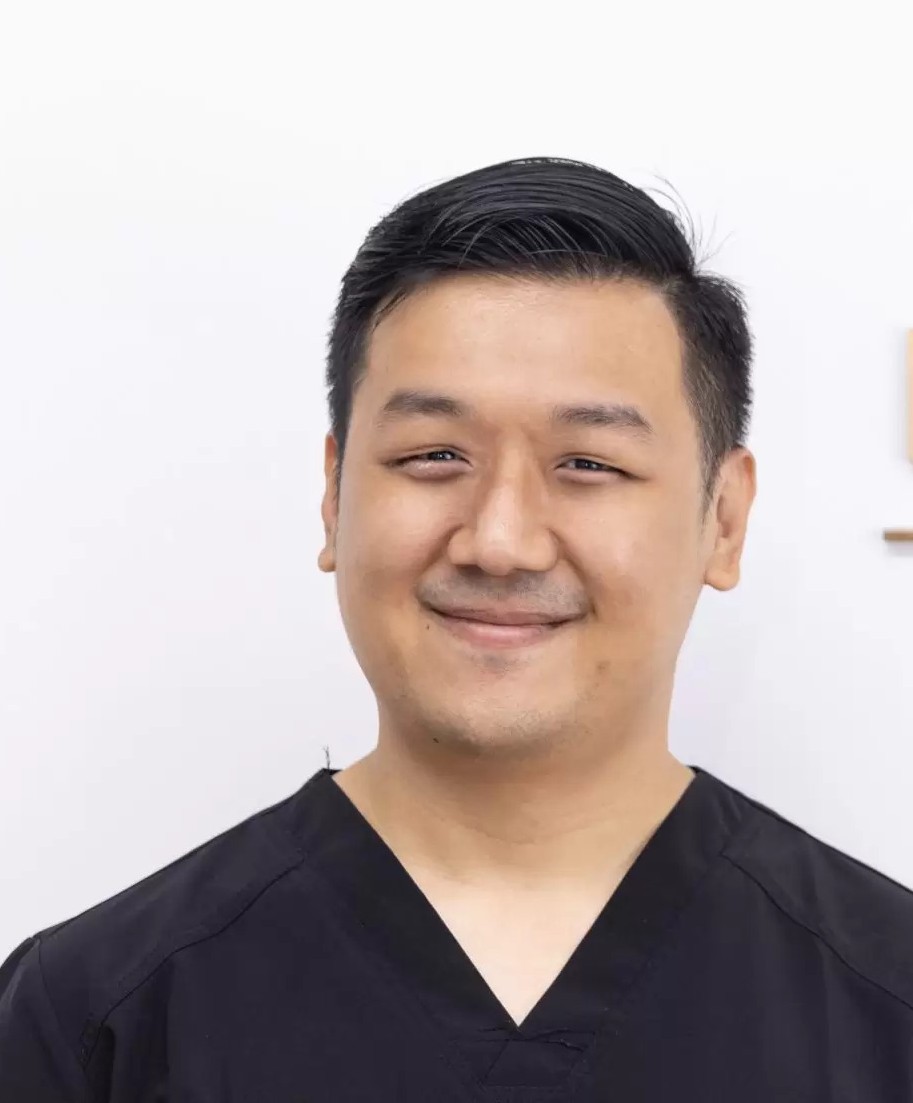
Written by
Winsen Citra
Principal Physiotherapist
Winsen is the Principal Physiotherapist at Elevate Physiotherapy, Singapore. A University of Melbourne physiotherapy graduate and former Singapore General Hospital physiotherapist, he specialises in sports and musculoskeletal rehabilitation and works with athletes and active individuals to recover from injury and return to full performance.