

Shoulder Bursitis: Symptoms, Causes and Treatment
Blogs, / By Winsen Citra
Quick Answer: Shoulder bursitis is irritation of the subacromial bursa, the fluid-filled sac that cushions the rotator cuff tendons beneath the bony arch of the shoulder. It rarely occurs on its own, usually sits alongside rotator cuff irritation, and responds to graded loading rather than to rest.
It starts as a catch when you reach for something on a high shelf. Within a few weeks it has become a dull ache on the outer shoulder that wakes you when you roll onto that side.
This guide from Elevate Physiotherapy explains what shoulder bursitis is in 2026, why the name is only half the story, and what the recent evidence actually shows about treatment. You will also learn why a scan report mentioning bursitis is far less alarming than it sounds.
What is shoulder bursitis?
Shoulder bursitis is irritation of the subacromial bursa, a thin fluid-filled sac sitting between the rotator cuff tendons and the bony arch above them. Its purpose is to let the tendons glide smoothly under that arch as the arm lifts. When it becomes inflamed and thickened, that gliding surface becomes a source of pain.
The name suggests a single tidy diagnosis, which is where the confusion begins. The bursa sits in direct contact with the rotator cuff tendons, and irritation of one almost always involves the other. Clinicians now group them together under the umbrella of subacromial or rotator cuff-related shoulder pain.
That grouping is not a technicality. It changes what you should expect from treatment, because a plan aimed only at calming a bursa will miss the tendon capacity underneath it. At Elevate Physiotherapy in Singapore the assessment looks at the whole shoulder complex rather than at the bursa alone.
A narrative review published in Annals of Medicine in May 2026 set out the current position on injection-based treatments for subacromial bursitis, concluding that corticosteroids provide robust short-term pain relief but carry potential long-term complications. That short-term framing runs through most of the evidence on this condition.
What causes shoulder bursitis?
Shoulder bursitis is caused by repeated compression and load through the subacromial space, usually from overhead activity that has increased faster than the shoulder’s capacity to handle it. Painting a ceiling, a new gym programme heavy on pressing, a return to swimming or racquet sport after a long break — the pattern is almost always a change in demand rather than a single injury.
Desk-based work contributes in a quieter way. Long hours in a fixed position reduce how much the shoulder blade moves through the day, and a shoulder blade that stops contributing leaves the subacromial space narrower during overhead reaching.
COMMON CONTRIBUTORS AT A GLANCE
|
Contributor |
How it loads the bursa |
What usually changes it |
|
Sudden increase in overhead load |
Repeated compression under the acromion before the cuff has adapted |
Graded reintroduction of overhead work rather than avoidance |
|
Reduced shoulder blade movement |
Less upward rotation, narrower subacromial space during reaching |
Scapular strength and mobility work |
|
Rotator cuff strength deficit |
Less control of the humeral head during lifting |
Progressive cuff loading through range |
|
Prolonged static desk posture |
Sustained position with little variation across the day |
Movement variety and position changes, not one ‘correct’ posture |
Age plays a part as well, though not in the way most people assume. Tissue changes accumulate in every shoulder over time, including in shoulders that have never hurt, which is the subject of the next section. Elevate Physiotherapy in Singapore treats the load-to-capacity mismatch rather than the birthday.
Does a scan showing bursitis explain the pain?
A scan showing bursitis does not on its own explain shoulder pain, because the same findings appear routinely in shoulders that have never hurt. Imaging describes tissue; it does not identify the source of symptoms. That gap is one of the most useful things to understand before starting treatment.
“More patients are arriving already ‘diagnosed’ by online searches and are anxious about scan findings,” says Winsen Citra, Principal Physiotherapist at Elevate Physiotherapy. “A lot of imaging findings — like some disc changes — are common and not necessarily the source of pain. Part of the job now is helping people interpret that information calmly and focus on what actually improves function.”
The shoulder evidence bears that out. A systematic review published in the Journal of Orthopaedic and Sports Physical Therapy in 2025 screened 3,801 records and included 53 studies of rotator cuff imaging findings in people with no shoulder symptoms at all.
WHAT SCANS FIND IN SHOULDERS THAT DO NOT HURT
|
Finding |
Imaging method |
Reported in asymptomatic shoulders |
|
Tendinopathy or partial-thickness tear |
MRI, population-based study |
65% |
|
Tendinopathy or partial-thickness tear |
Ultrasound, population-based study |
34% |
|
Full-thickness rotator cuff tear |
MRI, population-based study |
20% |
|
Full-thickness rotator cuff tear |
MRI, athlete studies |
0% to 11% |
The review rated the certainty of this evidence as low to very low, and the range across all included studies was wide. The direction of travel is still clear enough to be useful: a report describing bursal thickening or a partial tear is a common finding, not a verdict. A physiotherapist at Elevate Physiotherapy in Singapore will read the scan alongside what the shoulder can actually do, not instead of it.
How is shoulder bursitis treated?
Shoulder bursitis is treated first with graded loading of the rotator cuff and shoulder blade, with injection reserved for shoulders that cannot tolerate the early stages. The honest position is that exercise is the sensible starting point rather than a demonstrably superior one, and the recent evidence is more mixed than most clinics admit.
A meta-analysis of 19 studies and 1,349 participants, published in Musculoskeletal Science and Practice in 2026, compared exercise therapy against passive treatments for rotator cuff-related shoulder pain and found no short-term superiority — pain SMD −0.14 (95% CI −1.25 to 0.96) and disability SMD −0.06 (95% CI −1.57 to 1.45). Both confidence intervals cross zero comfortably.
A second review of 20 randomised trials, published in BMC Musculoskeletal Disorders in June 2026, reported that exercise reduces pain and improves function and range in middle-aged and older adults, with more limited effects on strength. And a 2026 meta-analysis restricted to adults over 60 pooled just three trials, finding a mean pain reduction of 1.60 points with a confidence interval running from 3.16 to 0.04 — an effect whose lower bound is almost nothing.
WHAT THE 2026 EVIDENCE SUPPORTS
|
Approach |
What the recent evidence shows |
Where it fits |
|
Graded loading of cuff and shoulder blade |
Improves pain, function and range; not proven superior to passive care short-term |
First line, and the part that builds lasting capacity |
|
Corticosteroid injection |
Robust short-term pain relief, potential long-term complications |
Where pain blocks the start of loading; a decision for a doctor |
|
Exercise after an injection |
SPADI improved with a moderate to large effect (d=0.72) in one small trial of 53 people |
The combination outperformed injection with advice alone |
|
Dry needling |
Included in the small older-adult evidence base; short-term effects only |
An adjunct alongside loading, not a substitute for it |
The most practically useful finding is the combination. A randomised trial published in the Journal of Clinical Medicine in March 2026 gave 53 people with chronic subacromial bursitis either a 12-week home resistance programme after an ultrasound-guided corticosteroid injection, or the injection with advice alone. The exercise group improved more on shoulder pain and disability and on abduction range, both beyond the threshold for a clinically meaningful change.
Dry needling at Elevate Physiotherapy in Singapore is sometimes used alongside that loading programme to settle guarding through the early phase, and it sits around the strength work rather than replacing it. Book with the singapore physio team if overhead reaching has been painful for more than a few weeks, if night pain is disturbing sleep, or if the shoulder has become weak rather than simply sore.
Frequently asked questions
What is the difference between shoulder bursitis and a rotator cuff tear?
Bursitis describes irritation of the fluid-filled sac that cushions the rotator cuff tendons, while a tear describes damage within the tendon itself. In practice the two overlap so often that clinicians group them under rotator cuff-related shoulder pain rather than separating them.
A 2025 systematic review of 53 studies found full-thickness rotator cuff tears on MRI in around 20% of a population-based sample of people with no shoulder symptoms at all, which is why a tear on a report does not automatically explain the pain. Elevate Physiotherapy in Singapore assesses what the shoulder can do under load rather than treating the scan report as the diagnosis.
How long does shoulder bursitis take to settle?
Most shoulders improve over a period of weeks to a few months with consistent loading, but no honest clinician will attach a fixed date to it. The pace depends on how long the shoulder has been irritable, how much overhead load you need to return to, and how consistently the programme is followed.
The recent evidence is candid about the limits here: a 2026 meta-analysis of 19 studies and 1,349 participants found exercise therapy no better than passive treatments in the short term, which suggests the early weeks are often about tolerance rather than dramatic change. Elevate Physiotherapy in Singapore progresses on measurable range and strength rather than on a promised timeline, and individual results vary.
Should I get a cortisone injection for shoulder bursitis in Singapore?
That decision belongs to a doctor, not to a physiotherapy clinic, but the evidence gives a useful framing. A narrative review published in Annals of Medicine in 2026 concluded that corticosteroids provide robust short-term pain relief while carrying potential long-term complications, so an injection is generally most useful where pain is blocking the start of rehabilitation.
A randomised trial published in the Journal of Clinical Medicine in March 2026 found that adding a 12-week home resistance programme after an ultrasound-guided injection improved shoulder pain and disability well beyond injection with advice alone, in a sample of 53 people. The pattern that emerges is injection to open a window, and loading to make the change last.
Can I keep exercising with shoulder bursitis, or should I rest it?
Complete rest is rarely the answer, and prolonged avoidance of overhead work tends to make the shoulder less tolerant rather than more. Most people can continue training with modifications, reducing the range or the load on painful movements while keeping everything else going.
Pain that settles within a day of a session is generally acceptable; pain that builds across sessions or disturbs sleep suggests the load is too high. The singapore physio team at Elevate Physiotherapy sets those thresholds individually after assessment, and a shoulder that has become weak rather than sore should be reviewed rather than trained through.
Shoulder bursitis sounds like a structural problem and behaves like a capacity problem. The bursa is irritated because the shoulder is being asked for more than it can currently give, and the fix is to raise what it can give. If reaching overhead has been painful for more than a few weeks or the shoulder is disturbing your sleep, book an assessment with Elevate Physiotherapy at Maju Avenue or Jalan Besar, or arrange home physiotherapy anywhere in Singapore.
This article is for informational purposes only. Please consult a qualified healthcare professional. Individual results vary and no treatment outcome is guaranteed.
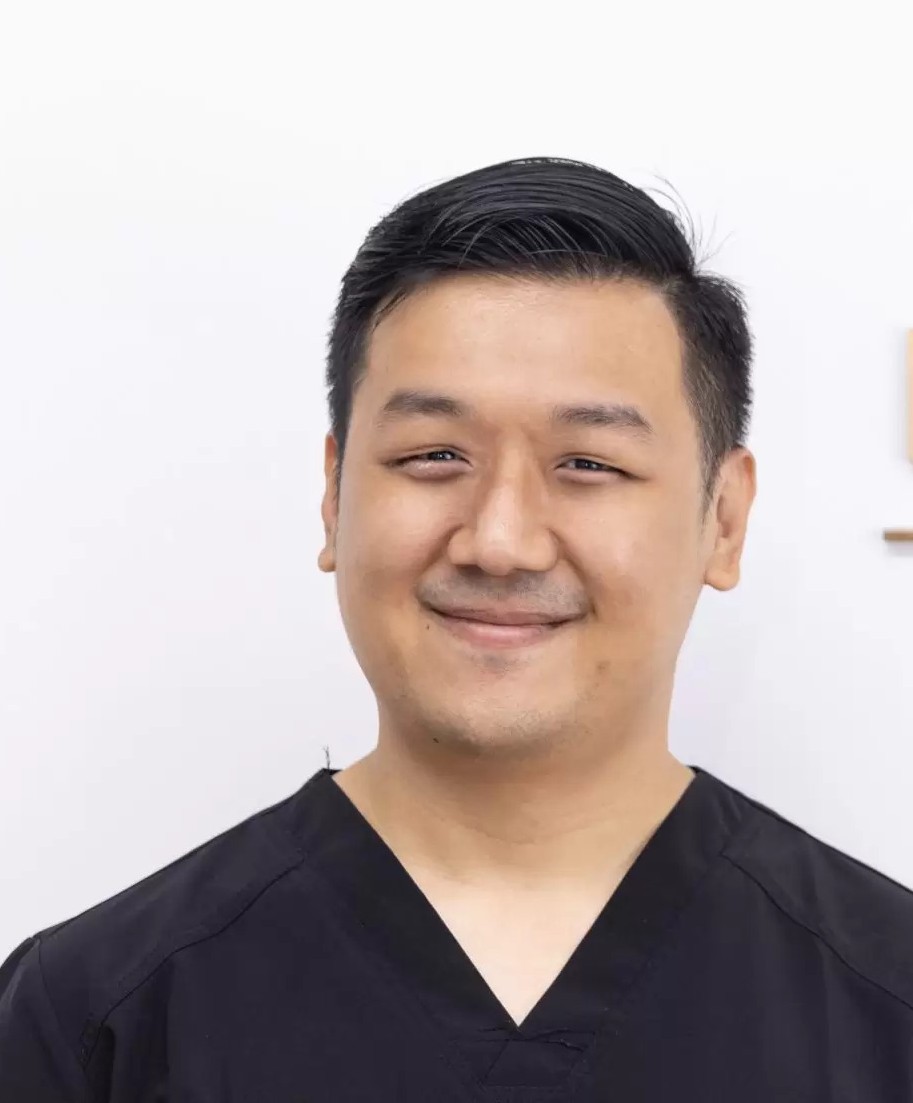
Written by
Winsen Citra
Principal Physiotherapist
Winsen is the Principal Physiotherapist at Elevate Physiotherapy, Singapore. A University of Melbourne physiotherapy graduate and former Singapore General Hospital physiotherapist, he specialises in sports and musculoskeletal rehabilitation and works with athletes and active individuals to recover from injury and return to full performance.