

Calf Strain: Causes, Symptoms, Treatment and Recovery
Quick Answer: A calf strain is a tear in the gastrocnemius or soleus muscle, usually felt as a sudden sharp pain in the back of the lower leg during a push-off or sprint. Return to sport ranges from about two to twelve weeks depending on severity, and recurrence is common when rehabilitation is cut short.
Most people can name the exact second it happened. A push off the back foot, a sprint for a bus, a change of direction on court — and a sharp catch in the back of the lower leg that makes the next step tentative.
This guide from Elevate Physiotherapy explains what causes a calf strain in 2026, how the symptoms differ between the two calf muscles, and what the recovery timeline honestly looks like. You will learn why calf injuries recur so often, and when to see a physiotherapist in Singapore.
What causes a calf strain?
A calf strain is caused by force exceeding the muscle’s capacity during a rapid lengthening contraction — typically an explosive push-off, an acceleration, or a foot landing while the muscle is already under stretch. The two calf muscles fail in different circumstances, which is why the injury story usually tells you which one is involved.
The gastrocnemius, the more superficial muscle, tends to tear during sudden ballistic movements with the knee straight, most often at the junction where muscle meets tendon. Court sports, sprinting and jumping account for the majority of these. A December 2025 narrative review in Sports Medicine – Open describes this as the classic acute presentation (Sports Medicine – Open, 2025).
The soleus, sitting deeper and crossing only the ankle, behaves differently. It is more often strained by runners, particularly when running uphill, and it presents as a gradual overuse problem rather than a single dramatic moment. That difference matters, because a soleus injury is easy to dismiss as tightness for weeks before it is properly assessed.
Training volume that rises faster than tissue capacity is the common thread. The Ministry of Health’s National Population Health Survey 2024 recorded 84.7% of Singapore adults meeting sufficient total physical activity, up from 78.5% the year before (MOH, 2025). At the sports injury clinic at Elevate Physiotherapy in Singapore, more of these injuries arrive in the weeks after someone restarts running than during peak season.
What are the symptoms of a calf strain?
The main symptoms of a calf strain are a sudden sharp pain in the back of the lower leg, pain on pushing off or rising onto the toes, and localised tenderness that you can point to with one finger. Bruising may appear a day or two later, tracking down towards the ankle.
Severity is traditionally graded in three bands. A Grade 1 strain produces sharp pain with minimal loss of strength or movement, a Grade 2 causes a temporary inability to walk normally with clear weakness in ankle movements, and a Grade 3 involves major disruption of the muscle.
That system is useful shorthand but blunt in practice, and the 2025 Sports Medicine – Open review is explicit that no single grading system or imaging modality has proven universally superior, with clinical assessment remaining the standard for return-to-sport decisions. The table below sets out what each grade usually looks like at Elevate Physiotherapy in Singapore.
CALF STRAIN SEVERITY AT A GLANCE
|
Grade |
What you notice |
Typical walking ability |
|
Grade 1 (mild) |
Sharp catch at the moment of injury, tightness afterwards, minimal weakness |
Walking possible, limp settles within days |
|
Grade 2 (moderate) |
Clear pain, obvious weakness pushing off, bruising over the following days |
Limping, often unable to rise onto the toes on that leg |
|
Grade 3 (severe) |
Immediate severe pain, sometimes an audible pop, marked loss of function |
Weight-bearing usually not possible without support |
Sudden severe calf pain with swelling, redness and warmth — particularly after long-haul travel, surgery or prolonged immobility — needs urgent medical review rather than a physiotherapy appointment, because a blood clot can mimic a muscle strain.
Is it a calf strain or an Achilles tendon rupture?
An Achilles tendon rupture is not a severe calf strain. It is a tear of the tendon that joins the calf muscles to the heel bone, a separate and far more serious injury that sits outside the calf strain grades above.
It usually happens during a sudden push-off or jump and is classically described as feeling like being kicked in the back of the ankle, sometimes with an audible pop. Most people cannot push off or rise onto their toes afterwards, and a gap may be felt in the tendon just above the heel.
A suspected rupture needs same-day medical review, because it is managed by a doctor, either in a boot or with surgery. Physiotherapy follows once that plan is set, and Elevate Physiotherapy in Singapore supports the later rehabilitation stage, including post-operative rehab.
How long does a calf strain take to heal?
Return to sport after a calf strain typically ranges from about two to twelve weeks depending on severity, according to the December 2025 review in Sports Medicine – Open. A mild Grade 1 often sits at the short end, while a substantial tear with tendon involvement occupies the longer end of that window.
The more useful number is what happens afterwards. A study published in September 2025, drawing on a decade of the Australian Football League’s Soft Tissue Injury Registry, examined 563 calf strains across 359 players and found recurrence rates of 13% to 21.3% within two years depending on how recurrence was defined. Twenty per cent of subsequent injuries occurred before the player had fully recovered from the first.
Those recurrences were costly. They took an average of 46.7 days to return to play, considerably longer than the original injury. That is the clearest available argument against finishing rehabilitation the moment walking feels normal, and it is why Elevate Physiotherapy in Singapore keeps the loading programme running past the point the limp disappears.
A typical progression looks like this:
- Days 1–5 — protect and load lightly. Walk within comfort, avoid stretching into pain, and begin gentle isometric calf holds once they can be done without a sharp catch.
- Weeks 1–3 — rebuild strength through range. Progress from double-leg to single-leg calf raises, then add bent-knee variations to load the soleus specifically.
- Weeks 3–6 — restore capacity and speed. Introduce higher-load calf work, hopping and skipping, then straight-line running once single-leg raises match the other side.
- Return phase — reintroduce sprinting, change of direction and sport-specific volume, progressing on objective side-to-side comparison rather than on how it feels.
Can physiotherapy help a calf strain?
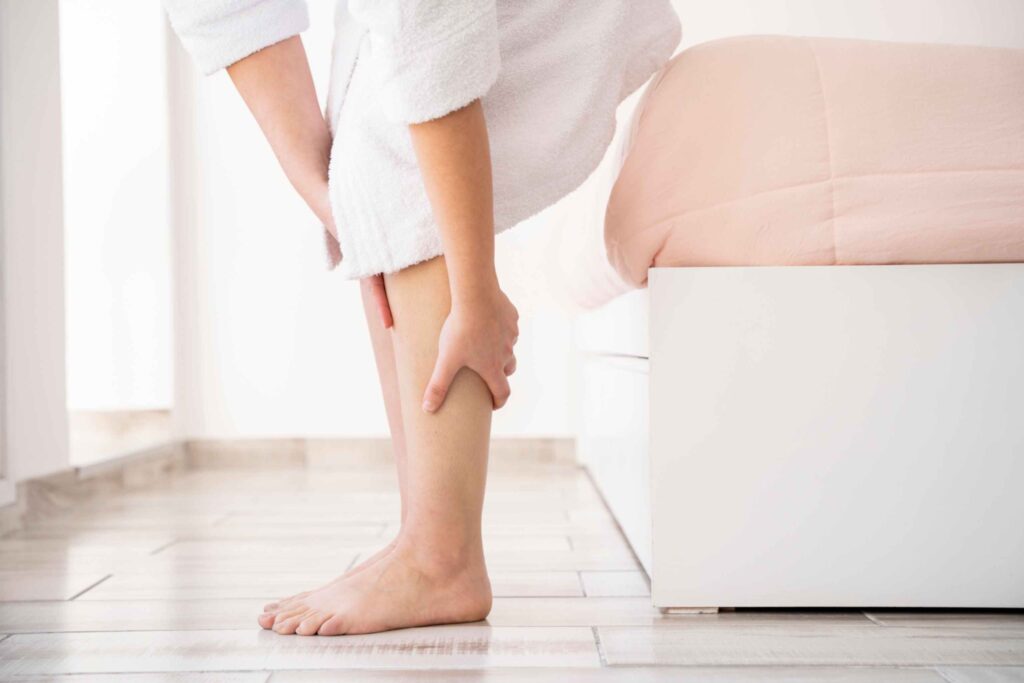
Physiotherapy helps a calf strain by loading the healing tissue progressively, restoring the strength difference between legs, and setting objective criteria for return to sport rather than relying on comfort. The evidence base for specific calf protocols is thin, so honest assessment and measurable progression carry more weight than any single technique.
“Don’t chase a quick fix or stop the moment the pain eases,” says Winsen Citra, Principal Physiotherapist at Elevate Physiotherapy. “The pain usually settles well before the tissue capacity is rebuilt, and that gap is where re-injury happens. Finish the programme and let the objective milestones — not just comfort — decide when you progress.”
That gap is exactly what the AFL registry data describes. A calf can feel entirely normal walking while still producing measurably fewer single-leg calf raises than the uninjured side, and that deficit is invisible without testing it.
Clinical sports massage at Elevate Physiotherapy in Singapore is sometimes used alongside the loading programme to manage tightness through the rebuilding phase, though it sits around the strength work rather than replacing it. See a physiotherapist promptly if you cannot rise onto your toes, if the calf swelled significantly within hours, or if this is the second calf strain in the same leg.
Disclaimer: This article is for informational purposes only. Please consult a qualified healthcare professional. Individual results vary and no treatment outcome is guaranteed.
Frequently asked questions
How do I know if I have pulled my calf muscle or torn my Achilles tendon?
The location and the sensation are the two clearest signals. A calf strain is felt in the muscle belly, higher up in the fleshy part of the lower leg, whereas an Achilles rupture is felt lower down near the heel and is classically described as being kicked or struck from behind.
An Achilles rupture usually leaves you unable to push off at all, and a gap may be felt in the tendon. Any suspicion of an Achilles rupture needs same-day medical review rather than a physiotherapy appointment, and Elevate Physiotherapy in Singapore will redirect accordingly. A calf strain, by contrast, is normally suitable for physiotherapy assessment from the outset.
Should I stretch a calf strain, or will that make it worse?
Aggressive stretching in the first days after a calf strain is generally unhelpful and can pull on tissue that is still knitting together. Gentle movement within a comfortable range is encouraged, but stretching into pain is not — the priority in the early phase is light loading, not length.
Once the sharp pain has settled, controlled strengthening through increasing range does more for tissue capacity than static stretching does. A physiotherapist at Elevate Physiotherapy in Singapore will set the point at which range work is safely added, based on how the calf responds to load rather than on a fixed number of days.
Why do calf strains keep coming back?
Calf strains recur largely because rehabilitation stops when the pain does, leaving a strength deficit that is invisible in daily walking.
A study published in September 2025 using a decade of the Australian Football League’s Soft Tissue Injury Registry found recurrence rates of 13% to 21.3% within two years across 563 injuries, and noted that 20% of subsequent injuries happened before full recovery from the first. Those recurrences took an average of 46.7 days to return to play. The sports injury clinic at Elevate Physiotherapy in Singapore addresses this by testing single-leg calf raise capacity against the uninjured side before clearing a return to running.
When can I run again after a calf strain in Singapore?
Running usually returns once you can perform single-leg calf raises through full range on the injured side at a count close to the uninjured side, and walk briskly without symptoms the following day. For a mild strain that milestone often arrives in the third or fourth week, while a more substantial tear takes longer.
Returning to running on comfort alone is the most common route back into a repeat injury. Elevate Physiotherapy in Singapore uses side-to-side testing and a graded running progression rather than a calendar date, and individual results vary with no recovery timeline promised.
A calf strain is rarely complicated to diagnose and frequently mishandled at the end, when the leg feels fine but is not yet strong. Building single-leg calf strength back to match the other side, and progressing on measurable criteria, is what keeps the injury from returning. If you have strained your calf or it has happened before, book an assessment with Elevate Physiotherapy at Maju Avenue or Jalan Besar, or arrange home physiotherapy anywhere in Singapore.
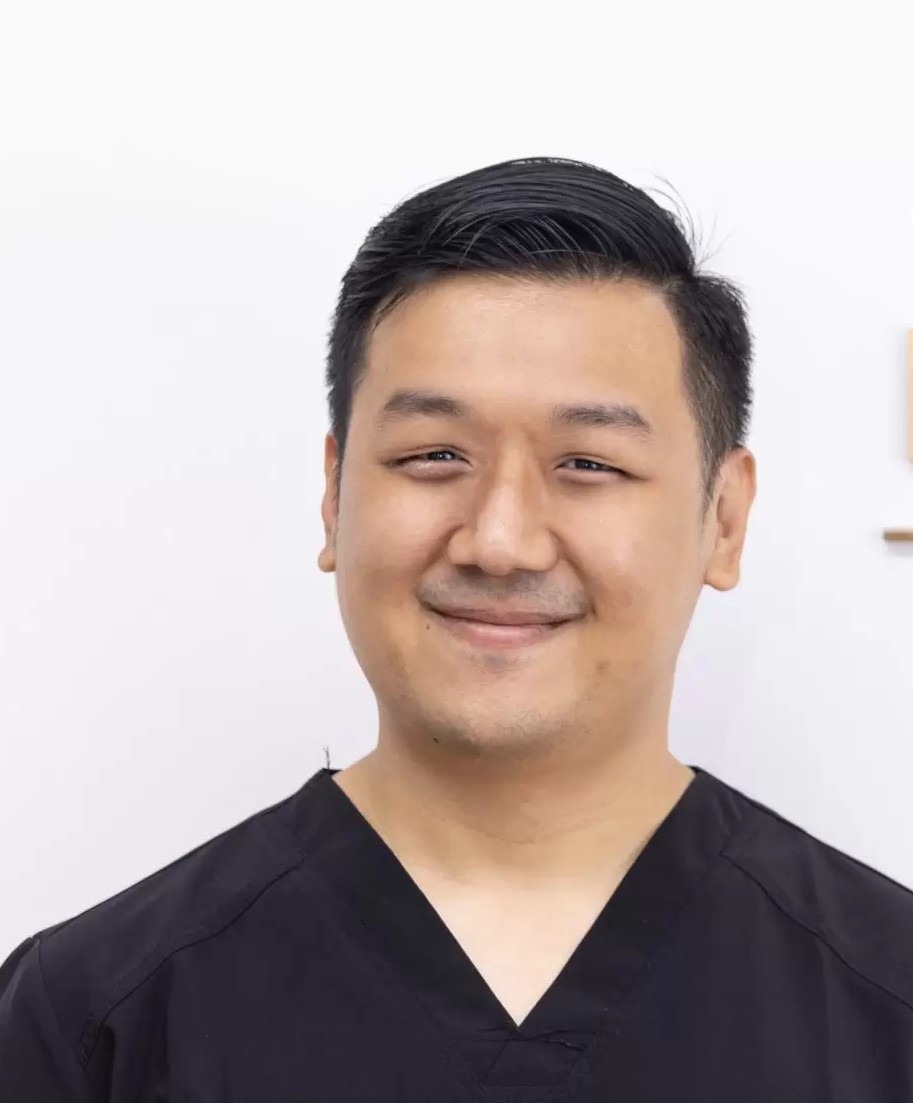
Written by
Winsen Citra
Principal Physiotherapist
Winsen is the Principal Physiotherapist at Elevate Physiotherapy, Singapore. A University of Melbourne physiotherapy graduate and former Singapore General Hospital physiotherapist, he specialises in sports and musculoskeletal rehabilitation and works with athletes and active individuals to recover from injury and return to full performance.